Museums and Collections of Antiquities in Australia and New Zealand
There are over 66 institutions that hold antiquities and archaeological artefacts related to the cultures of the Mediterranean, North Africa and Middle East in Australia and Aotearoa New Zealand. Highlights from our University collections of antiquities were bought together in the showcase volume Fifty Treasures, published by ASCS to mark the society's 50th anniversary in 2016. In 2025, a comprehensive distribution guide to all known collections was published by Candace Richards in the volume Mediterranean Collections in Australia and Aotearoa New Zealand: Perspectives from Afar.
University Collections
The Australian Centre for Ancient Numismatic Studies (ACANS) is an internationally recognised leader in the study of coinage in the ancient societies of the Mediterranean, Egypt and the Near East. The collection includes over 6500 numismatic specimens as well as a dedicated library, microscopy station and workspaces.
 The Classics Museum provides a study resource for the general public, school and college students, as well as students from Classics, Art History, Archaeology and Anthropology, the Canberra School of Art and the University of Canberra's National Centre for Cultural Heritage Science Studies. The Classics Museum provides a study resource for the general public, school and college students, as well as students from Classics, Art History, Archaeology and Anthropology, the Canberra School of Art and the University of Canberra's National Centre for Cultural Heritage Science Studies.
The collection, established in 1962, now comprises some 600 objects from Cyprus, Asia Minor, Greece, and the Roman world. Some of the items are on loan to the Museum from the National Gallery of Australia, from the Parliament House Collection, and from private collectors. The larger part of the collection, however, has been built up over the years as a teaching resource. The items in the collection are used in various ways in the courses taught by the Classics Program, and by other programs, such as Art History.
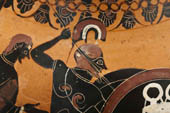
Above: Part of a scene from the “Johnson Vase”, Attic black-figure amphora, c. 530-520 BC
The Berndt Museum is an Indigenous-led institution that holds one of the most significant collections of Aboriginal and Torres Strait Islander cultural material in the world. While the primary focus of the collection relates to Aboriginal and Torres Strait Islander cultures, it also extends globally to Melanesia and Southeast Asia, spanning regions like China, India, Japan, and Egypt.
A small museum is maintained in the Centre for Archaeology in which antiquities from around the Mediterranean are displayed. The majority of the collection is on loan to the University. The cultures represented in the collection include Egyptian, Mesopotamian, Cypriot, Etruscan, Greek and Roman.
The Classics and Archaeology Collection forms part of the Ian Potter Museum of Art at the University of Melbourne. The Collection was founded in honour of John Hugh Sutton who was tragically killed in a motorcycle accident in 1925. The small collection of ceramics and coins has been augmented over time by amalgamating departmental collections and through further donations of coins and antiquities from individuals and fieldwork.
Rev. James Davy Dodgson bequeathed over 100 items to Queen’s College in 1892. The collection is made up bronze figurines, faience beads and amulets, ceramics, shabtis, papyri, fragments from wooden and cartonnage coffins, inscribed material, and a selection of fifty-four fragments of textiles dating from the Pharaonic to the late Roman and Coptic periods. More information: https://queens.unimelb.edu.au/mummymania
 Gale History Museum, Macquarie University Gale History Museum, Macquarie University
The Gale History Museum at Macquarie University is part of the Faculty of Arts and is home to 18,000 historic artefacts ranging from the prehistoric to the 21st century.
Opened in 2021 as the Macquarie University History Museum, in May 2025 it was renamed in honour of Dr Janet Gale and her late husband Dr William Gale. The Museum incorporates the collections of the former Museum of Ancient Cultures and Australian History Museum.
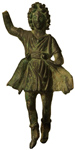
Right: Roman bronze figure of a lar, c. 1st cent. AD
 The John Elliott Classics Museum contains representative examples of the art and culture of ancient Egypt and Mesopotamia, Greece, Etruria and Rome. It contains approximately 800 pieces with new additions purchased or donated on a regular basis. The John Elliott Classics Museum contains representative examples of the art and culture of ancient Egypt and Mesopotamia, Greece, Etruria and Rome. It contains approximately 800 pieces with new additions purchased or donated on a regular basis.
In 1954 the then Professor of Classics, J.R. Elliott, initiated the acquisition of ancient Greek vases with a view to creating a collection which would both serve as a teaching adjunct to the courses in the Department of History and Classics and provide an exhibition of original antiquities accessible to all Tasmanians.
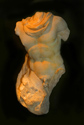
Left: Roman marble torso
The Nicholson Collection constitutes the most extensive collection of antiquities in the southern hemisphere and is a valuable resource for teaching, research and public engagement with ancient and modern histories. It includes almost 30,000 artefacts of artistic and archaeological significance from Egypt, Greece, Italy, Cyprus and the Middle East, spanning over 10,000 years of human history. The collections relate to tangible and intangible cultural heritage, ethics, displacement and lived experiences. They are activated by communities, artists, schools, and scholars to contribute to meaningful conversations vital for today.
In 1963, the purchase at a London auction-house of a red-figure Attic amphora marked the establishment of a collection of antiquities designed to enrich the teaching programs of Classics and Ancient History at the University of Queensland. Over a period of thirty years the collection has grown steadily in size and in reputation under the guidance of Classics and Ancient History staff members, and today the Antiquities Museum has on display a broad range of ancient artefacts stemming from Western Asia, Egypt, Greece and Rome.
This archaeological material reflects the achievements of the great ancient civilisations which developed in the lands bordering the Mediterranean Sea. The collection provides the only comprehensive survey of ancient Mediterranean antiquities on public view in Queensland. The objects span almost 3500 years of history, and are in a variety of materials – stone, pottery, terracotta, metalware and glass. Together they give a picture of the technological and artistic advances made over that time by the forerunners of Western civilisation.
Right:
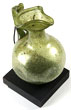
Roman glassware jug
The James Logie Memorial Collection is one of the finest collections of Greek and Roman antiquities on public display in the southern hemisphere and is housed in the Logie Room in the Department of Classics at the University of Canterbury. Vases and other pottery items from the Archaic period onwards form the bulk of the collection, although some highly prized Attic black-figure amphorae and marble items of the Roman period are included.
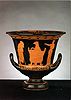
Right: Medea rejuvenating the ram, Attic red-figure calyx krater by the Kleophon painter, c. 440 BC
Professor A.D. Trendall bequeathed his large personal library of books, journals and offprints, as well as his extraordinary archive of photographs of South Italian red-figure vases, to La Trobe University in order to provide the basis for a research centre in the broad area of ancient Mediterranean studies.
In November, 1998, a Research Centre was established which is at present located, according to Trendall’s expressed wish, in his former apartment above the South Wing of Menzies College.
The Museum of Classical Archaeology is the teaching collection of the Department of Classics, Archaeology and Ancient History. Its 1700 display items make up the largest collection in South Australia of artefacts from Rome and Ancient Greece. Artefacts include glass, pottery and metalware from many ancient sites, from Minoan Crete to the Hellenistic Greek cities in Southern Italy, from Etruscan Italy to the Roman provinces of Britain, Gaul and Egypt (The University of Adelaide: 150 Years of Making History. Preserving a legacy, p.193)
Otago Museum possesses the finest collection of ancient Greek vases and Roman coins in New Zealand. The wider Classics collection includes pottery, coins, metals, and glass from the cultures of the ancient Mediterranean. It also includes replicas of iconic objects and statues. Classics staff and students of the University of Otago contribute to the enhancement of those collections through their research and study.
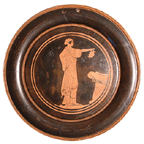 UNEMA is the only regional ancient history and archaeology museum in Australia. The Museum supports teaching and research in material culture. It promotes community interest in the history of peoples through the ages. The Museum began in 1959 as part of the Department of Classics and has been developed consistently since as a result of purchases and donations, particularly of the Woite and Stewart Collections. The Museum boasts an excellent selection of antiquities from the civilisations of the ancient Mediterranean and the Near East which has been more recently complemented by materials from Australia, S.E. Asia, New Guinea and the Pacific region provided through Museum purchases and private donations. It boasts a collection now of well over 1000 items. UNEMA is the only regional ancient history and archaeology museum in Australia. The Museum supports teaching and research in material culture. It promotes community interest in the history of peoples through the ages. The Museum began in 1959 as part of the Department of Classics and has been developed consistently since as a result of purchases and donations, particularly of the Woite and Stewart Collections. The Museum boasts an excellent selection of antiquities from the civilisations of the ancient Mediterranean and the Near East which has been more recently complemented by materials from Australia, S.E. Asia, New Guinea and the Pacific region provided through Museum purchases and private donations. It boasts a collection now of well over 1000 items.
The Discipline of Archaeology maintains a substantial teaching collection related to the University of Sydney’s excavations in Australia and abroad. The majority of the collections related to the University of Sydney excavations at Pella (Tabaqat Fahl) and related projects in Jordan.
The Classics Museum houses a small collection of Greek and Roman artefacts, not all of which are on display. Some have been purchased by the Classics programme, while others are on loan from the British Museum, National Museum of Athens or private owners.
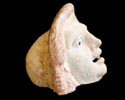
Right: Terracotta mask
This is a small (approximately 300 objects), representative collection of antiquities relevant to courses in the Department of Classics and Ancient History, University of Auckland, including items from Egypt, the Aegean, Greece, Italy and North Africa. The collection is named in honour of Emeritus Professor Walter Kirkpatrick Lacey (1921-2011), who held the chair in Classics at the University of Auckland from 1969 to 1986
Collections and Museums dedicated to Antiquities and Archaeology
The Australian Institute of Archaeology was founded in 1946 as a private organisation to promote the scientific study of the ancient world, especially the period contemporary with the biblical narrative. The artefact collection numbers approximately 6000 items and provides material for students of archaeology to study by way of a hands-on introduction to the discipline and as the basis for research. The Institute arranges public lectures, sponsors exhibitions, promotes research and produces occasional publications. It also publishes an annual journal, Buried History, containing papers that utilise the results of archaeological research shedding light on the ancient world for an informed readership.
The Abbey Museum of Art and Archaeology contains collections of prehistoric bone and stone artefacts, metalwork, ceramics, glass, sculpture, leather, wood carvings, gemstones, lacquer, paper, prints and paintings spanning the last 500,000 years of human history.
The Centre for Coins, Culture and Religious History Foundation is a unique ministry of the Cathedral. The research and teaching work of the Foundation is based on a substantial collection of coins and other artefacts. The collection currently consists of 2,225 coins together with around 375 medals, medallions and tokens. In addition, there are smaller sets of relevant objects including seals (bullae), figurines, ceramics, manuscripts, books and icons.
The Hellenic Museum is Australia's only museum dedicated to showcasing the transformational power of Greek art, history and culture — a culture 8,000 years in the making, and one constantly being remade in ever more exciting ways. The Hellenic Museum hosts a long-term collection of Greek antiquities spanning thousands of years, alongside an ongoing program of current exhibitions examining Greek culture, arts and history.
Other collections
Many more collections of antiquities can be found in Australia’s and Aotearoa New Zealand’s state and national museums, galleries, libraries and war memorials. Some regional galleries and not-for-profit cultural institutions have also received donations of small items, such as coins, shabti’s, lamps and pottery, often from local benefactors. Notable private institutions, open to the public, include the Museum of Old and New Art (Tasmania) and Ravenscar House Museum (Christchurch), which both care for and display a variety of artefacts related to the ancient cultures of the Mediterranean.
|


 Teece Museum & James Logie Memorial Collection at the University of Canterbury